Small Stories · Big Value
Shown the Door by His Own Company, He Built 5,127 Prototypes—Where Does Dyson's Premium Come From?
Shown the Door by His Own Company, He Built 5,127 Prototypes—Where Does Dyson's Premium Come From?
One Hair Dryer, Two Kinds of Accounting
Walk into the small-appliance floor of any department store and you are met by a curious sight: machines that do no more than dry hair and clean floors, with versions a few hundred dollars can cover sitting on the very same shelves as versions priced from NT$12,900 that shoppers pay for without blinking. The expensive ones tend to carry one and the same name: Dyson.
If the functions differ little, what exactly does the extra money buy?
The financials are more intriguing still. According to Dyson's published report for fiscal year 2025 (a private company releasing its own figures, without external audit), global revenue slipped from £6.57 billion to £6.13 billion—a fall of about 7%. Yet in the same report, EBITDA climbed from £940 million to £1.11 billion, up 18%. The company sold less than the year before and earned more. Accounts like that are beyond any business that lives on thin margins and volume—only a brand with pricing power hard enough can produce them.
And where does pricing power come from? For that answer, we must go back some forty years, to a workshop in an English back garden.
A Cardboard Cyclone in the Backyard Shed
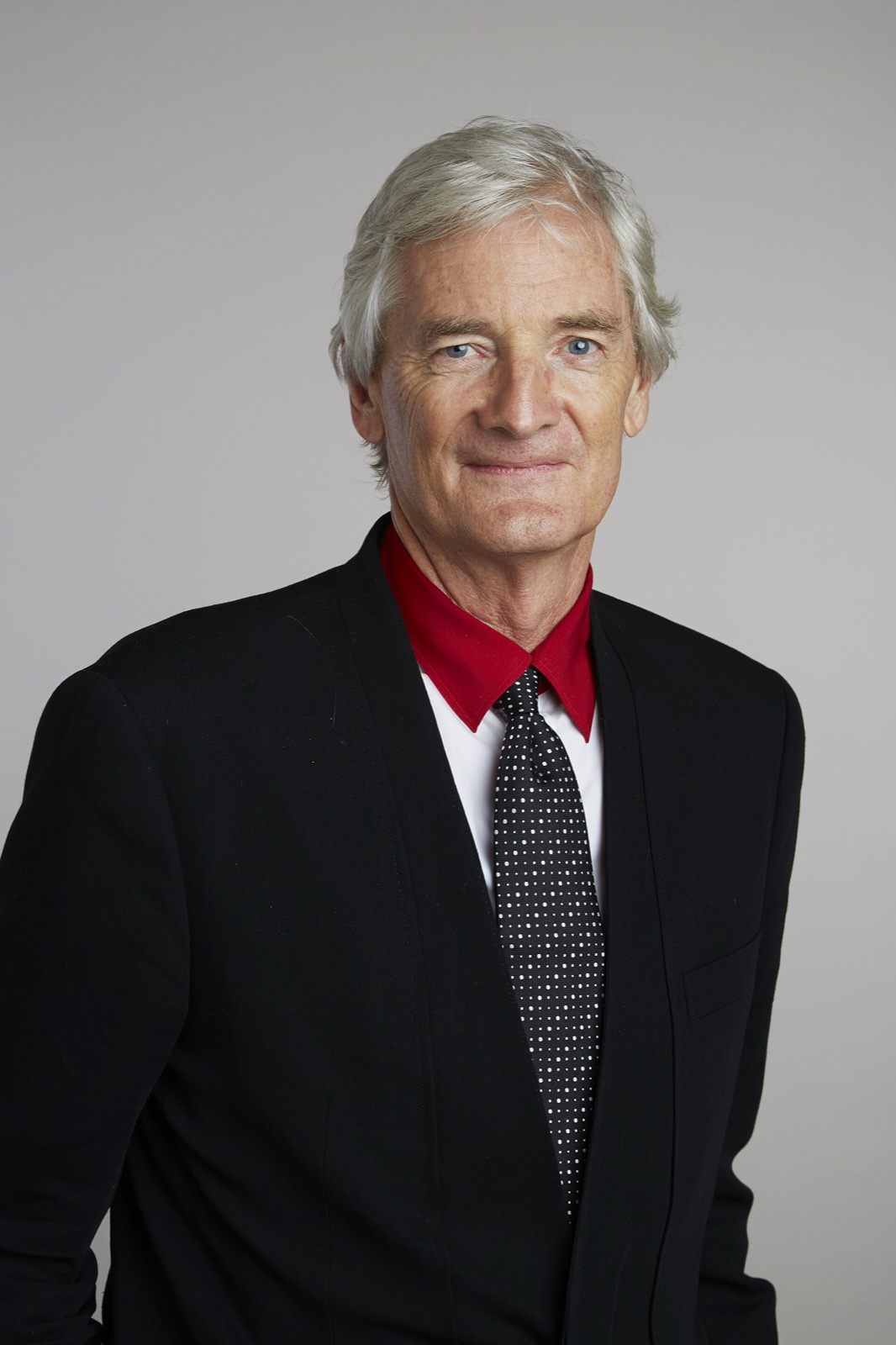
In 1978, James Dyson was thirty-one years old. The family Hoover infuriated him: whenever the dustbag clogged, suction collapsed. Take it apart and the picture was clear—fine dust had sealed the fabric filter shut. The problem was never the motor; it was the bag.
By coincidence—or something shaped like it—the Ballbarrow, the ball-wheel wheelbarrow he had helped invent, was in production, and the plant spraying powder coating onto its parts was suffering blockages of exactly the same kind. Determined to understand airflow, he began visiting a sawmill after dark to watch industrial cyclones hurl wood dust out of the air; back home, he rolled a homemade cyclone from cardboard and tape in the garden shed, lashed it to a Hoover Junior, and switched it on—it worked.
What happened next became the most famous passage in the brand's history. The official biography phrases it as "four years, 5,127 prototypes"; in a 2007 interview with Fast Company, Dyson himself put it more bluntly: "I made about 5,127 prototypes... failed 5,126 times." (A founder describing his own past, unaudited by any third party—though a man who tallies his failures down to the single unit is telling you something about his character.)
Prototype number 5,127 worked. The story, however, refused to turn smooth from there.
Shown the Door—and Then Japan Paid Up
Armed with ever more mature cyclone technology, Dyson returned to the Ballbarrow board seeking backing. The reply, in substance: if this thing really had a market, Hoover and Electrolux would have built it long ago. He would not let go, pushed on regardless—and the outcome was his departure from the very company he had helped found.
(One widespread account deserves correction along the way—the claim that "every major manufacturer turned him down." In fact, licensing of the technology existed throughout, merely at small scale; history tends to beat the legend precisely in details like this one.)
Then came years lived on borrowed money: partner Jeremy Fry put up 49 percent, loans covered much of the remainder, and the household stood on his wife's earnings teaching art classes at a school. From 1980, dual-cyclone patents were filed one after another; in 1983, the first licensed machine, the Rotork Cyclon, reached the market quietly and sold roughly five hundred units. When the American licensee Amway modified the design and sold it under its own name, the ensuing lawsuit ran until a settlement in 1991.
The country that truly rescued the technology was Japan. In 1986, the licensee Apex put the G-Force into production there at a price of $2,000—for the Japan of that day a luxury-grade tag, not an appliance-grade one; a pink body, foldable into a small table. In 1991, the G-Force won an international design fair award in Japan and crossed into status-symbol territory: a vacuum cleaner priced without apology read, in Japanese homes of the era, as taste rather than waste.
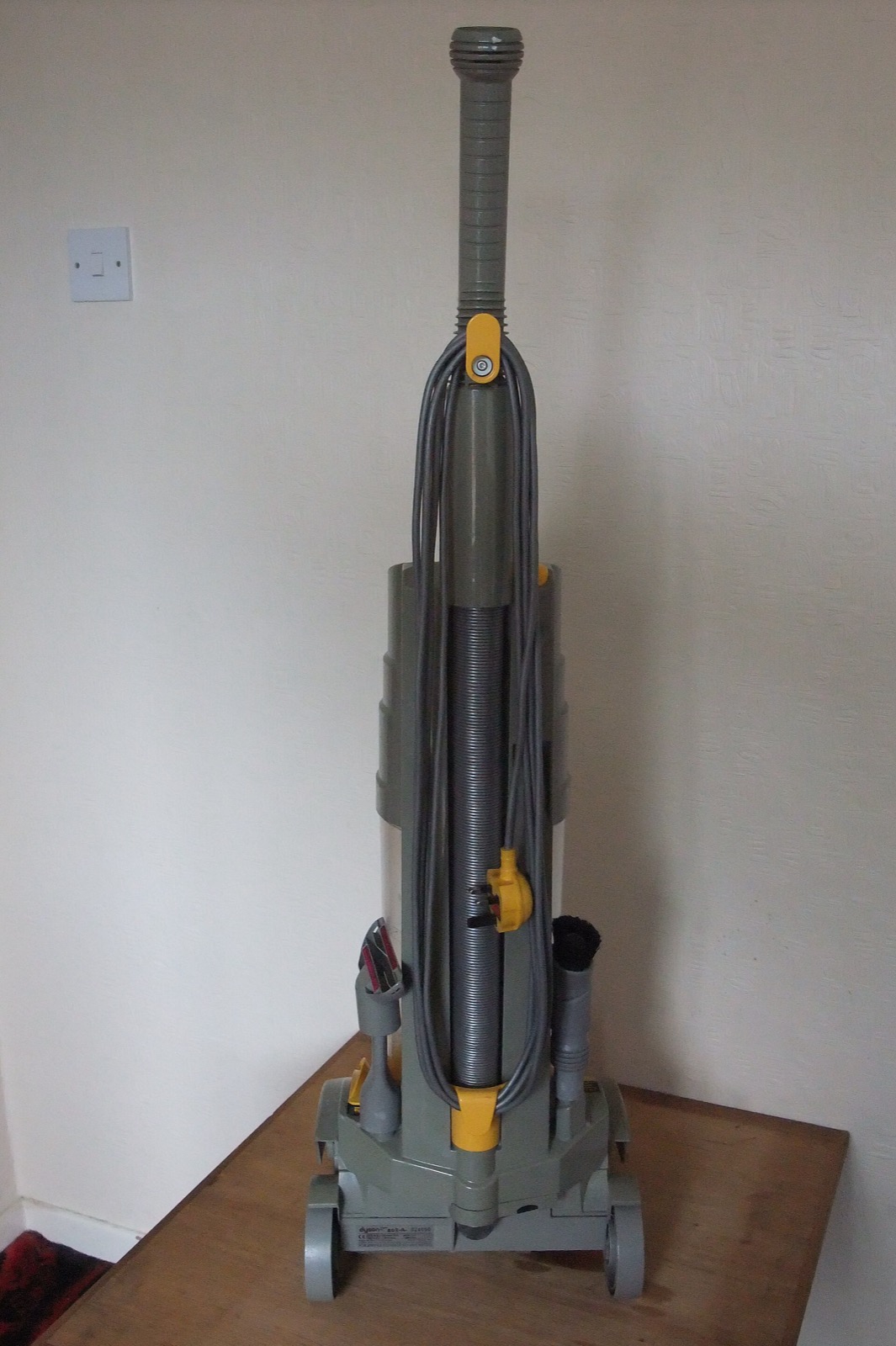
It was this licensing income that let Dyson establish his own company in 1991. In 1993, the DC01—carrying his own name—launched in Britain and led national sales within eighteen months; by 2001, Dyson held 47 percent of the UK upright-vacuum market. Count from that dusty bag in the backyard to volume production under his own name in 1993: fifteen years in all. The idea the board once waved away ended up living in Britain's living rooms.
When Even Your Rivals Start Copying You
There is a cruel test of a brand story's mettle: is anyone willing to risk being sued to copy you?
In 2000, the UK High Court found that Hoover had deliberately copied Dyson's cyclone technology and awarded damages of £4 million, plus a further £2 million in legal costs. The amount is hardly astronomical; the meaning is complete. The design once dismissed with "the big makers could do this whenever they liked" had, twenty-some years later, become something the industry leader would rather take to court than live without. History permitted itself one joke here: the machine that angered Dyson onto the inventor's road was itself a Hoover. And the market stamped this technology story's seal of approval—in the form of a judgment.
Putting Its Failures on Display
Had the narrative closed there, Dyson would amount to one more motivational anecdote. What is genuinely rare lies further on: this company files its failures among the official records too.
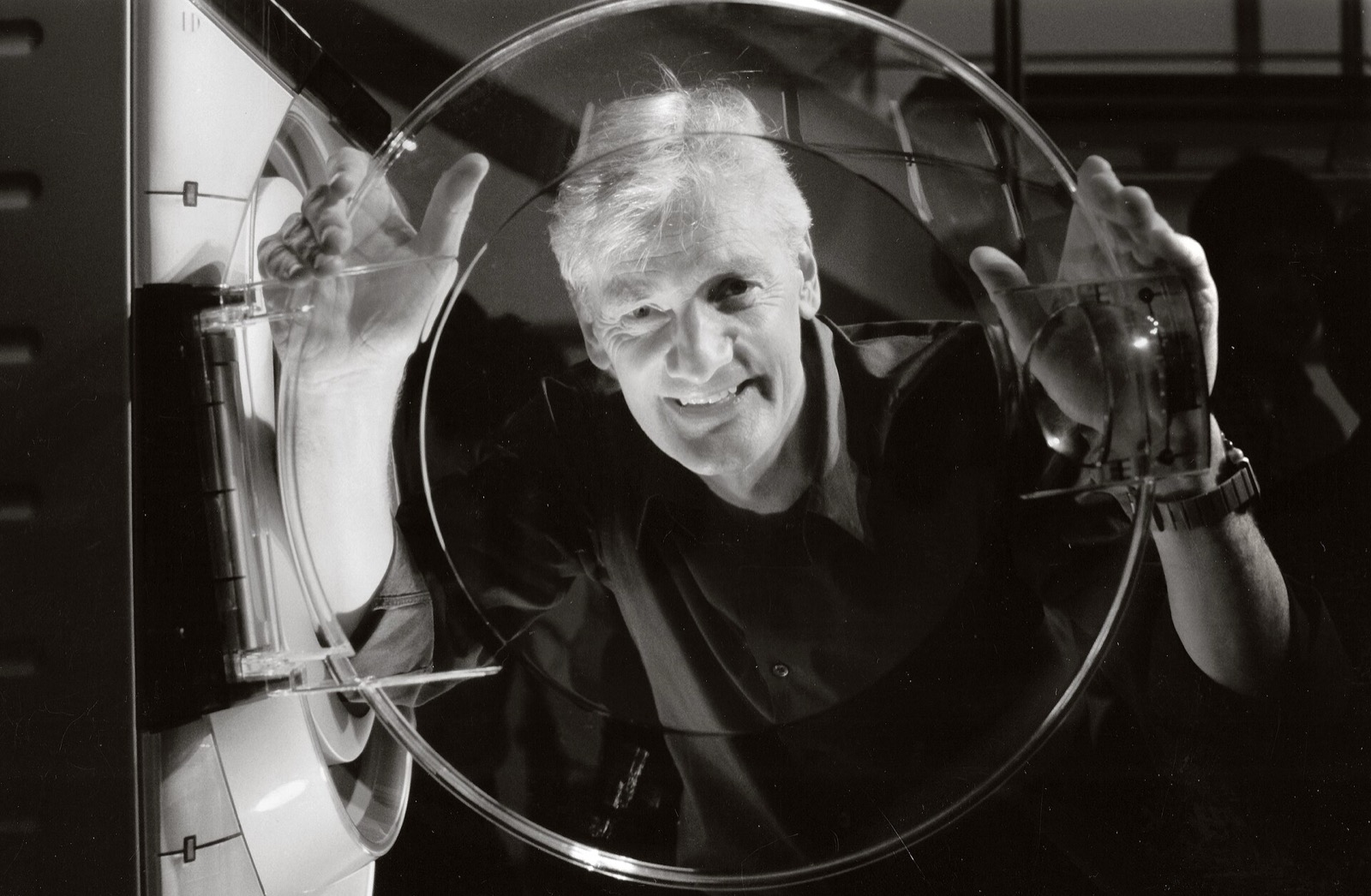
The Contrarotator, a twin-drum washing machine launched in 2000, is classified by the company itself as a commercial failure and discontinued in 2005. The electric car program ran far larger: at its height, a declared £2 billion commitment and a team of four hundred, halted in 2019 upon review, with actual spending beyond £500 million (covered by both the BBC and Autocar). Those setbacks sit today on the official biography page, shelved beside the successful products.
Most companies' PR departments would gladly cut failure from the record entirely; Dyson leaves it on the front page. That is not modesty—it is calculation. When a company declares its failure figures as faithfully as its triumphs, outsiders stop bothering to question the successes. Trust is an asset that matures slowly, and its interest is paid out as premium.
Where the Premium Comes From: Three Sources and One Contract
Back to the opening question: what earns the right to charge this much?
Disassembled to the bottom, Dyson's premium rests on three things.
First, the effort is verifiable. The Supersonic hair dryer, launched in 2016, came with an officially stated budget of £50 million, 103 engineers, and 600 prototypes, tested against 1,010 miles of human hair in total (official release figures, widely cited across the media); the V9 digital motor it carries spins at up to roughly eight times the speed of a conventional hair dryer motor (official "up to" wording), and the same motor's cumulative output has passed one hundred million units by the official count. Consumers may never audit a single claim—but they know the receipts exist. Step one of any story is genuine effort as its raw material, and the material must withstand handling—and Dyson turned that first step into a fixation: patent numbers, court judgments, failed products, all laid out in daylight. Effort, here, is not a cost line. It is evidence for the court record.
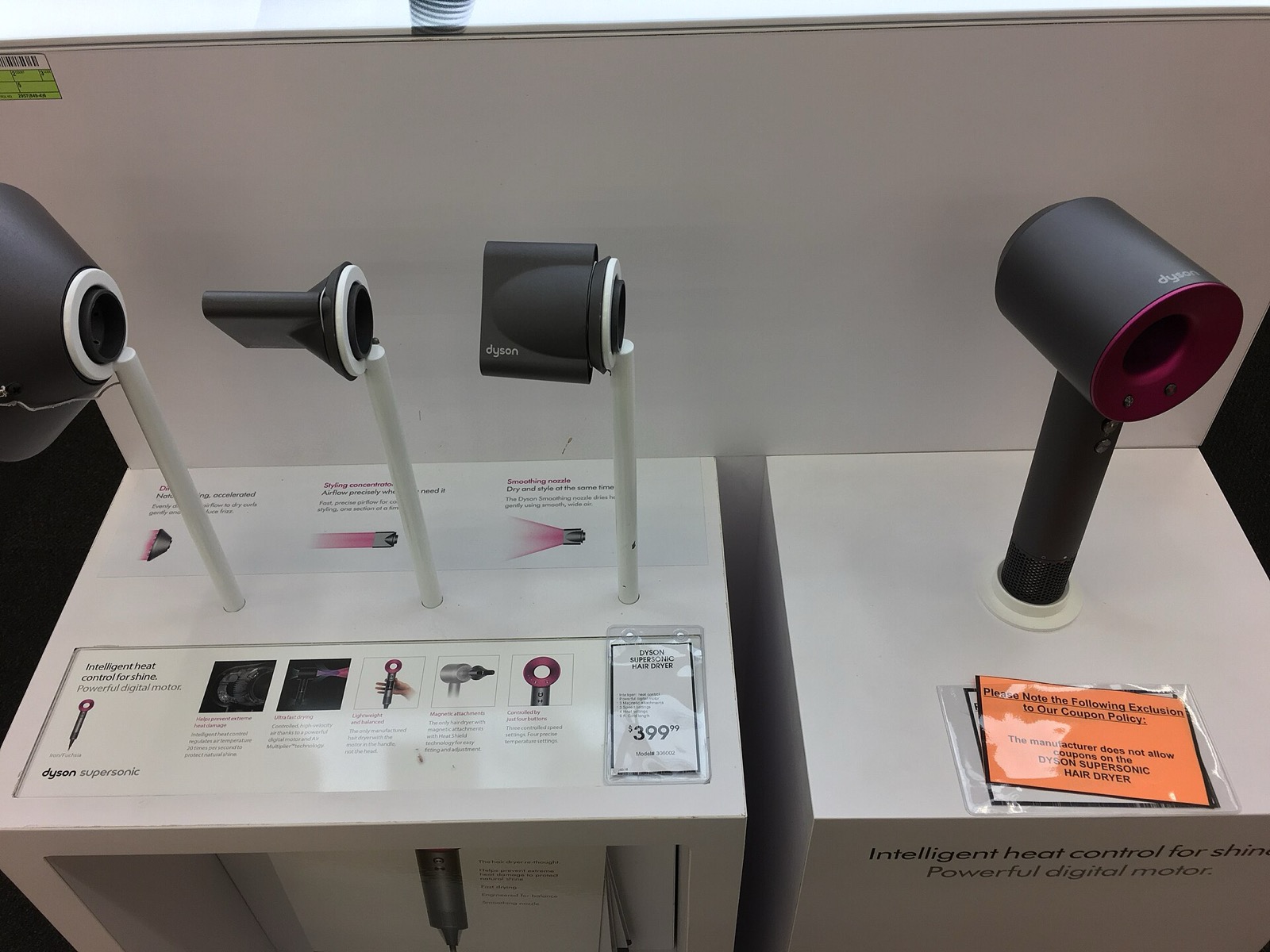
Second, the category switch, executed cleanly. The same motor in the same plastic shell, filed under "home appliance," is compared against whatever sits on the discount shelf; filed under "engineering object," its comparables become design and craftsmanship. Move the category, and the price anchor moves with it. Worth noting: production relocated long ago to Malaysia and Singapore—the story this brand sells was never "where it is made," only "who designed it, and how much work went in."
Third, the price itself is part of the narrative. The hair dryer from NT$12,900, the styler at NT$17,600 (both Taiwan official-site list prices; promotions are routine—HD08 has been seen at NT$9,900 and HS05 at NT$9,999, so slack between the consensus price and the street price always remains)—the high ticket itself speaks for the engineering promise. Expensive is one of the ways this brand talks.
Pile the three together and they converge on a single reading: Dyson's premium is no conjuring trick from the marketing department; it is the market's price for verifiable density of effort, after a change of category and years of accumulated consensus. Genuine effort laid down, the story re-files the product, consensus forms, and price feeds back into the story—four steps, taken in order, with the greatest weight pressed onto the first.
Consensus, however, remains consensus. Public summaries of Euromonitor's 2025 findings show that in its home market of Britain, SharkNinja has overtaken Dyson as the leading vacuum cleaner brand; the standing promotions of Taiwanese retail likewise remind us that list price and transaction price never fully touch. A premium is not an asset bought once and owned outright—it behaves more like a contract requiring renewal through continued R&D, and that fiscal-2025 report of "revenue down, profit up" is the latest evidence that the contract is still in force.
How many renewals remain in it? The materials for that judgment are all on the table: patents, judgments, financial statements, records of failure. Not one is missing.
[Affiliate Disclosure] Some product links in this article participate in affiliate marketing. Purchases made through them may earn this site a commission; commissions do not affect our content or editorial stance.
Image Credits and Licenses
All images in this article are taken from Wikimedia Commons and used under the Creative Commons licenses indicated on each file's page:
- Royal Society uploader, CC BY-SA 4.0, Wikimedia Commons—Portrait of James Dyson (2015)
- Lankyrider, CC BY-SA 4.0, Wikimedia Commons—The DC01 upright vacuum cleaner
- Michiel Hendryckx, CC BY-SA 3.0, Wikimedia Commons—James Dyson with the Contrarotator washing machine (2000)
- FASTILY, CC BY-SA 4.0, Wikimedia Commons—Supersonic hair dryer